
Unboxing iPhone Duo Indonesia - Channel YouTube GadgetIn
Apple iPhone Duo In-Depth Review: The Future of Foldables or Just Expensive Hype?
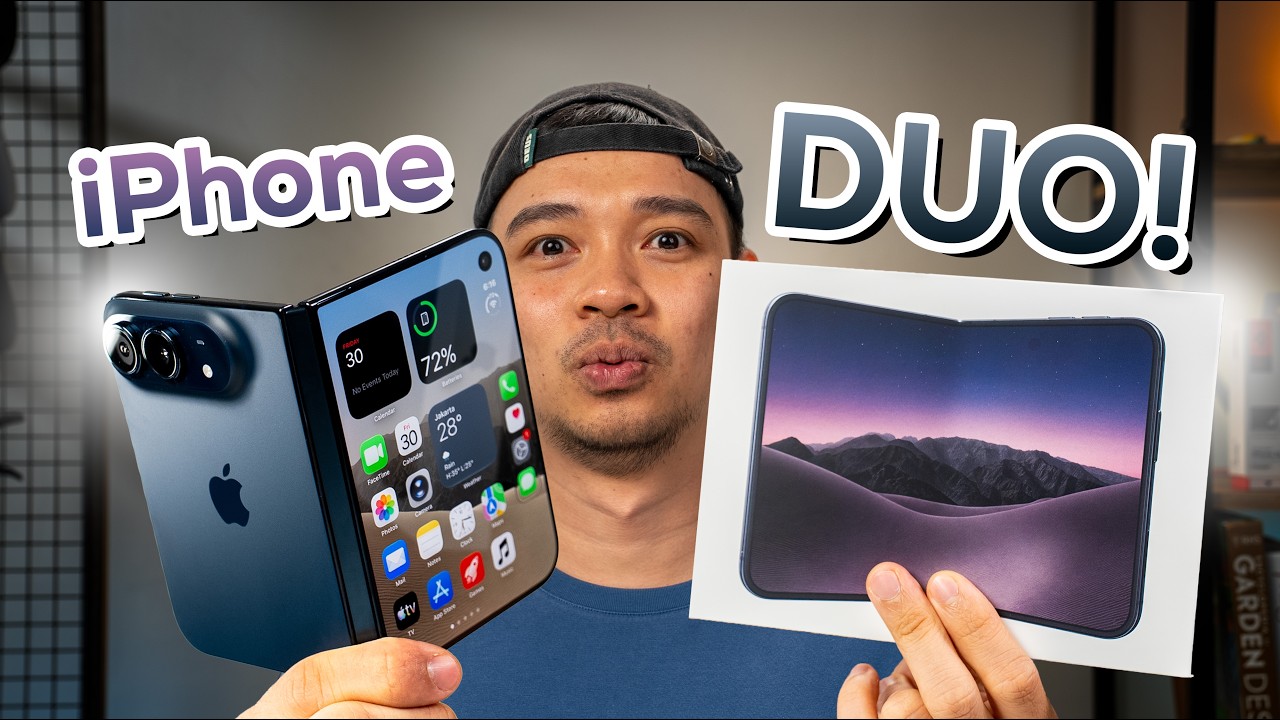
The tech universe has spent years anticipating Apple's response to the foldable smartphone revolution. While Android manufacturers like Samsung, Huawei, Oppo, and Vivo have pioneered the category through multiple generations—pushing through the fold-eight era and experimenting with tri-fold concepts—Apple has notoriously taken its time. Now, the wait is officially over with the unveiling of the iPhone Duo, Apple's inaugural venture into foldable technology. In this extensive hands-on review, we dissect every angle of the official Indonesian retail unit to determine whether this ultra-luxury device justifies its staggering price tag or if it merely rides the coattails of the iconic Apple logo.
The anticipation surrounding the iPhone Duo is unlike anything seen in recent smartphone history. Despite foldable hardware existing in mainstream markets for nearly a decade, public curiosity skyrocketed the moment Apple introduced its interpretation. Priced between Rp45,678,910 (approximately $2,900 USD) for the base 256GB storage configuration and soaring up to nearly Rp76,000,000 (roughly $4,800 USD) for the monstrous 2TB flagship tier, the iPhone Duo places itself in an unprecedented stratosphere of consumer electronics pricing. But does the user experience match the exorbitant financial investment?
Unboxing Experience, Retail Packaging, and eSIM Exclusivity
True to modern Apple minimalist aesthetics, the retail packaging of the iPhone Duo is surprisingly slim and compact. The front of the box features a life-sized, high-gloss embossed render highlighting the device in its folded state with an artistic landscape wallpaper. The Indonesian retail unit arrives officially imported by PT. Erajaya Swasembada Tbk, marked with the standard red triangular regulatory sticker on the rear packaging.
Upon breaking the elongated dual pull-tabs, users are greeted directly with the handset resting in an open tablet form factor. Beneath the device, Apple continues its strict eco-friendly packaging ethos. The bundled accessories are stripped down to the bare essentials: a premium braided USB Type-C to Type-C charging cable, minimal regulatory documentation, and setup cards. Notably absent are the traditional SIM ejection tool and a charging brick. The iPhone Duo completely eliminates the physical SIM tray in favor of pure eSIM architecture, requiring users to migrate their cellular carrier profiles digitally.
Industrial Design: Titanium Chassis and iPad-Inspired Ergonomics
Holding the iPhone Duo evokes an immediate sensation of substantial, dense luxury. Weighing in at approximately 250 grams, it is noticeably heavier than competing Android foldables, which have recently slimmed down closer to the 215–230 gram bracket. However, that heft is offset by remarkably thin profiles when unfolded: measuring a razor-thin 5.2mm to 5.4mm per side, and roughly 11mm when fully closed.
Apple has constructed the frame from aerospace-grade titanium with a matte finish along the hinge spine and chassis, paired with a dual-pane Ceramic Shield back. The colorway tested here—dubbed "Night Sky"—presents a deep, moody midnight blue hue reminiscent of the classic iPhone 12 Pro Pacific Blue. A lighter "Star White" model is also available for those who prefer clean, high-contrast aesthetics.
Button Placement and Biometrics: Farewell Face ID, Welcome Touch ID
One of the most radical physical departures in the iPhone Duo is the complete absence of TrueDepth Face ID hardware. Instead, Apple has integrated a high-precision Touch ID fingerprint sensor directly into the side-mounted power button. This functional shift echoes the hardware lineage of the modern iPad Air and iPad mini series, allowing for rapid physical authentication whether the device is folded or unfolded.
Further emphasizing this iPad DNA, Apple has moved the volume buttons to the top edge of the frame rather than the side. While this design keeps the chassis sleek and uncluttered when held horizontally, it presents a learning curve for longtime iPhone users accustomed to standard side volume rockers. Positioned beside the power button is the dedicated Camera Control capacitive button, offering tactile shutter control and haptic slide adjustments for photography enthusiasts.
Dual Display Technology: The Nano-Texture Advantage
The display engineering of the iPhone Duo represents both familiar excellence and bold experimentation. On the exterior sits a compact 5.4-inch OLED cover display featuring a squarish 1.41:1 aspect ratio. It looks and feels remarkably like a miniature digital passport or a pocket notebook, operating with a smooth 120Hz ProMotion adaptive refresh rate and stellar outdoor brightness.
Unfolding the handset reveals an expansive 7.6-inch primary OLED workspace. What sets this internal panel apart from every other foldable on the market is Apple's decision to implement a matte, nano-texture glass coating directly over the ultra-thin flexible substrate. This matte treatment drastically diffuses light reflections, eliminating the harsh mirror-like glare typical of glossy plastic screen protectors.
The Crease Dilemma and Under-Display Camera Cutouts
A persistent critique of foldable smartphones has been the display crease. Thanks to the light-scattering properties of the nano-texture finish, the center crease on the iPhone Duo becomes nearly invisible under direct room lighting when the screen is active and displaying bright content. However, when the screen is powered down or viewed at severe off-axis angles, a slight tactile and visual trough remains noticeable.
Additionally, the internal screen features an under-display 4MP FaceTime camera. Instead of leaving the camera under the matte finish—which would severely degrade image clarity—Apple created a tiny circular cutout through the matte layer, revealing a pristine, clear glass lens opening. While this preserves video call fidelity, the glossy circle is distinctly visible against the surrounding matte display panel.
Hinge Mechanics, Durability, and the Dust Ingress Reality
Apple claims the iPhone Duo boasts an industry-first IP68 water and dust resistance rating for a full-sized foldable. On paper, the '6' indicates complete protection against fine dust and sand particulates, while the '8' guarantees water submersion beyond 1 meter for up to 30 minutes. The hinge resistance feels remarkably rigid, premium, and refined, snapping firmly into flat tablet orientation and closing with a satisfying, dampened magnetic thud.
However, real-world extreme durability tests—such as those popularized by teardown channels like JerryRigEverything—paint a more cautious reality. When exposed to coarse sand and abrasive particles, debris can still manage to bypass the micro-bristle seals within the gear housing, resulting in audible grinding noises and hinge stiffness. While water resistance remains peerless, users must remain vigilant around sand, pocket lint, and abrasive dirt.
Software Reimagined: iOS Tailored for a Foldable Ecosystem
Hardware is only half the battle; the true success of a foldable lies within its operating system. On the iPhone Duo, Apple has introduced a customized branch of iOS that reimagines user interface paradigms specifically for unconventional aspect ratios.
The Off-Center Dynamic Island and Right-Handed Optimization
Because of the folding mechanics and internal component packaging, the iconic Dynamic Island has been relocated from the center-top to the top-right corner of the cover screen. In this new vertical orientation, the Dynamic Island creatively merges system status indicators into a unified cluster: the time, battery percentage, Wi-Fi icon, and cellular signal dots are nested together in an intuitive, space-saving arc.
Furthermore, Apple has shifted core navigational UI elements, system back buttons, and even the dock icons along the right edge of the screen. This layout facilitates effortless one-handed thumb navigation for right-handed users. However, for left-handed individuals, this ergonomic bias creates a noticeable handicap, as reaching across the broad width of the device to tap system shortcuts can cause hand strain, and system settings currently offer limited left-handed customization options.
App Continuity, Fluid Animations, and Multitasking
Where the iPhone Duo truly flexes its software dominance is in visual continuity. Opening an application like Instagram or YouTube on the cover screen and simultaneously unfolding the device triggers a jaw-dropping, uninterrupted transition. Video frames stretch smoothly without stuttering, while user interface containers seamlessly morph into desktop-grade responsive layouts.
Multitasking is supported via an intuitive split-screen workflow. Users can drag and drop applications side-by-side across the folding axis—such as streaming a YouTube video on the left panel while browsing web links or social media on the right. When folded halfway in a laptop configuration, applications like Netflix and YouTube automatically enter Flex Mode, projecting the media onto the top upright display while transforming the bottom half into interactive playback controls and volume sliders.
Raw Power and Gaming Performance: Apple Silicon A20 Pro
Under the hood, the iPhone Duo is powered by the bleeding-edge Apple A20 Pro processor, paired with 12GB of unified memory. Built on an advanced node process, this chipset handles the heavy graphic workloads of running dual displays with effortless headroom.
In real-world gaming tests running intensive titles like Genshin Impact, the iPhone Duo effortlessly holds 120 FPS at ultra settings. The matte nano-texture screen delivers an exceptional tactile glide for on-screen controls, eliminating thumb friction and greasy smudge buildup. Most impressively, if a user decides to fold or unfold the device in the middle of a chaotic boss fight, the game engine resizes dynamically without crashing, reloading textures, or dropping audio—a software feat that currently outclasses the Android competition.
Camera Systems: Dual 48MP Lenses and Innovative Cover Screen Features
To keep the chassis slim, Apple refrained from equipping the iPhone Duo with the triple-lens periscope array found on the flagship Pro Max series. Instead, it sports an elegant dual-camera arrangement housed in a horizontal pill module:
48MP Main Sensor: Optical Image Stabilization (OIS), f/1.6 aperture, next-gen Photonic Engine.
48MP Ultrawide Sensor: 120-degree Field of View, Macro photography capabilities.
While the optical zoom is limited compared to telephoto-equipped devices (relying on 2x sensor crops and digital zooms up to 10x), the color science, dynamic range, and video fidelity match the finest output of standard flagship iPhones. The real magic, however, lies in how the foldable form factor enhances photography workflows.
Vlogging with the Rear Camera and "Kid Cue" Animations
By enabling the cover screen preview while using the primary rear cameras, content creators can record ultra-high-definition 4K 60FPS vlogs using the superior 48MP main sensor rather than relying on inferior selfie cameras. The depth of field, natural background bokeh, and low-light stabilization make it an unrivaled tool for handheld video production.
For parents, Apple introduced an ingenious feature called "Kid Cue". When framing a photo of a toddler using the primary cameras, the exterior cover display plays engaging, colorful animated cartoons (such as Snoopy or interactive mascots). This captures the child's direct gaze toward the camera lenses, resulting in effortless, perfectly focused portraits.
Accessories Ecosystem: Protection with Style
Given the staggering financial investment required to own the iPhone Duo, protecting the device is paramount. Third-party and first-party accessory makers have developed specialized solutions:
Apple Official Folio Leather Case: A sleek, magnetic fabric/leather wrap that covers both panels with an integrated stand, priced around Rp2.5 million.
Spigen Slim Armor Pro S: Features an automated semi-sliding hinge shield that protects the fragile spine from direct drop impacts, complete with an integrated metal MagFit kickstand ring.
Spigen Nano Pop: A lightweight dual-tone matte protective case offering textured side grips without adding bulk to the hinge.
Final Verdict: Should You Buy the iPhone Duo?
The Apple iPhone Duo is a triumphant engineering marvel that redefines what a high-end luxury smartphone can be. Its nano-texture matte folding display is arguably the best implementation of flexible screen technology to date, virtually neutralizing glare and hiding screen creases better than its glossy rivals. Combined with fluid app continuity, the desktop-grade horsepower of the A20 Pro, and innovative photography utilities, it stands as an elite status symbol.
However, for the vast majority of consumers, a traditional slab smartphone—such as the standard iPhone Pro or Pro Max—remains the undeniably smarter, more durable, and more economically sound choice. Foldables by nature remain delicate hardware instruments requiring conscious care around sand, dust, and pressure. But if your budget knows no limits, and you yearn to experience the bleeding edge of Apple's design future today, the iPhone Duo is an unmatched masterpiece of mobile engineering.
More My Components Framer : Framer Marketplace
Channel YouTube : Playlist Games on YouTube
Link My Store in CGTrader : My Profile on CGTrader
Link My Profile in BlenderNation:My Profile on BlenderNation
Link My Store in BlenderMarket / SuperHive : My Store BlenderMarket ( SuperHive )
Like,Share, Comment, and Subscribe !!!
✨ Support Me :
Buy me a coffee: Buy me a coffee
Link Ko-Fi: Support me on Ko-fi
Link PayPal: Donate via PayPal
Please visit my store, if you want to buy you can via this link or contact me : My LinkTree
Email : colab232777@gmail.com


